Advanced Data Analytics with Bayesian Methods
RISE studies data through causal reasoning, Bayesian statistics, and information theory, tackling real-world problems in anomaly detection, diagnostics, and predictive analysis.
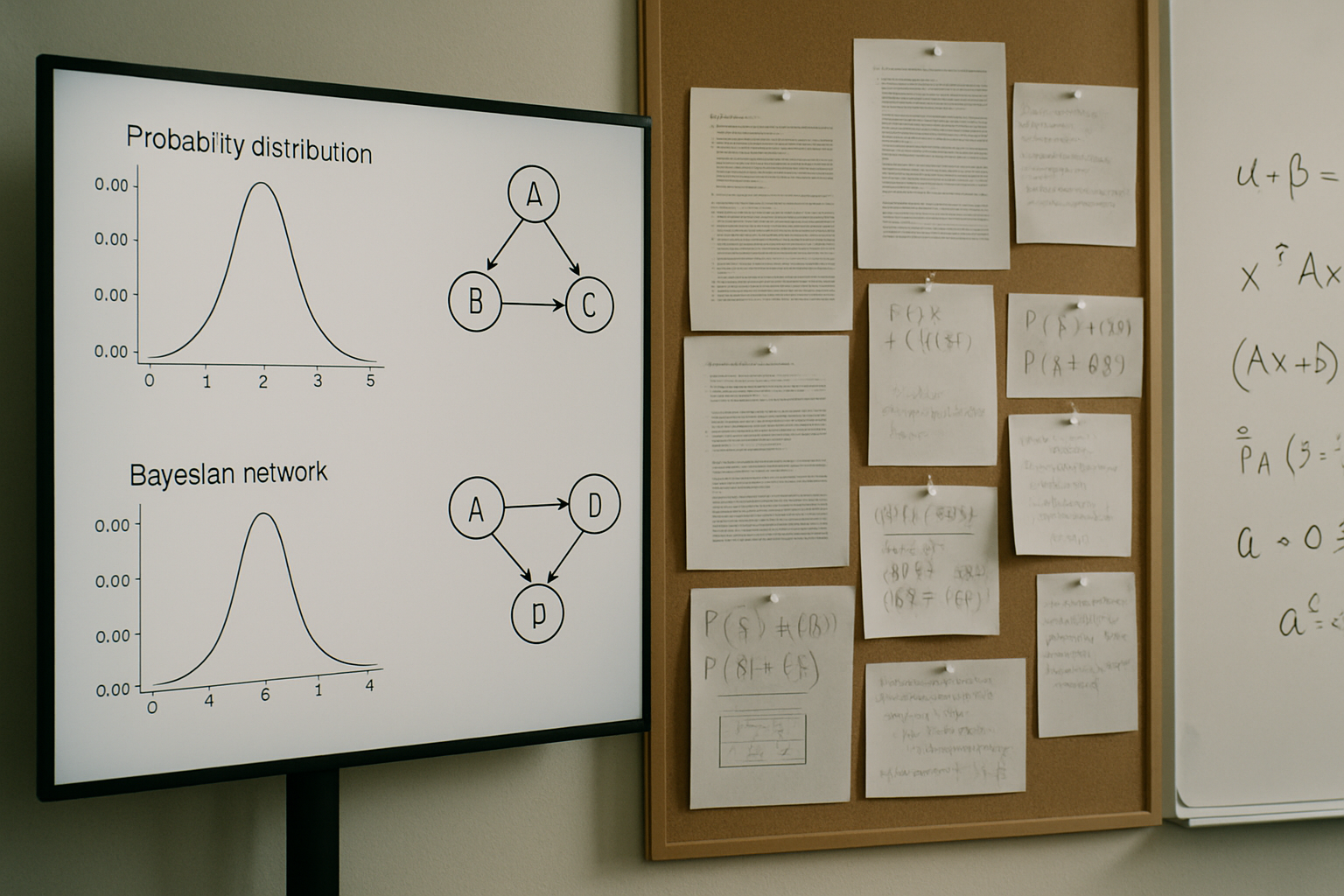
Within Advanced Data Analytics, RISE studies different sources of data through the lens of causal reasoning, Bayesian statistics, and information theory. This rigorous mathematical foundation enables tackling complex real-world problems where simple pattern matching isn’t enough.
The Approach
Bayesian methods offer unique advantages for industrial and scientific applications:
- Uncertainty quantification: Understanding not just predictions, but confidence levels
- Prior knowledge integration: Combining expert knowledge with data
- Causal reasoning: Moving beyond correlation to understand cause and effect
- Small data scenarios: Working effectively when data is limited
Application Areas
RISE applies advanced analytics across diverse domains:
Telecom Industry
Anomaly detection and diagnostics help maintain network reliability, identifying problems before they impact customers.
Solar Cell Production
Quality analysis and process optimization improve manufacturing yields, making renewable energy more cost-effective.
Manufacturing
Predictive maintenance and process control reduce downtime and improve product quality.
Research Focus
The team tackles problems where traditional machine learning falls short:
- Anomaly detection: Finding unusual patterns that signal problems
- Diagnostics: Understanding root causes of observed effects
- Causal inference: Determining what actions will lead to desired outcomes
The Bayesian Advantage
Unlike purely data-driven approaches, Bayesian methods can:
- Work with smaller datasets
- Incorporate domain expertise
- Provide honest uncertainty estimates
- Update beliefs as new evidence arrives
This makes them particularly valuable in industrial settings where data may be limited but expert knowledge is available.
Integration with AI
Bayesian methods increasingly combine with deep learning to create hybrid systems that offer both the pattern recognition power of neural networks and the principled uncertainty quantification of Bayesian statistics.


